
My Child Is Smart, So Why Is Reading So Hard?
I want to tell you about a little girl I’ll call Ellie.
Ellie was a third grader, and she was a dream. Great behavior. Hand up during every class discussion. Ask her a question about the story we’d just talked about, and she had a thoughtful answer, every single time.
Then I’d ask her to read a passage on her own and take the quiz. And she failed. Every time.
Here’s the part that stuck with me. I tried giving her written questions that were exactly the same as the oral questions we had just talked through. Same questions. Same words. She had answered every one of them out loud. And she still failed.
She wasn’t lazy. She wasn’t distracted. She wasn’t “not trying.” She understood the story perfectly. What she couldn’t do was get the words off the page.
If a little voice in your head keeps saying, “Something about my child’s reading isn’t adding up,” stay with me. This one is for you.
Reading Is Two Jobs
Most of us think of reading as one skill. It’s really two.
The first job is decoding: looking at letters and turning them into words. The second is comprehension: understanding what those words mean and thinking about them. They are separate skills, and a child can be strong in one and struggling in the other.
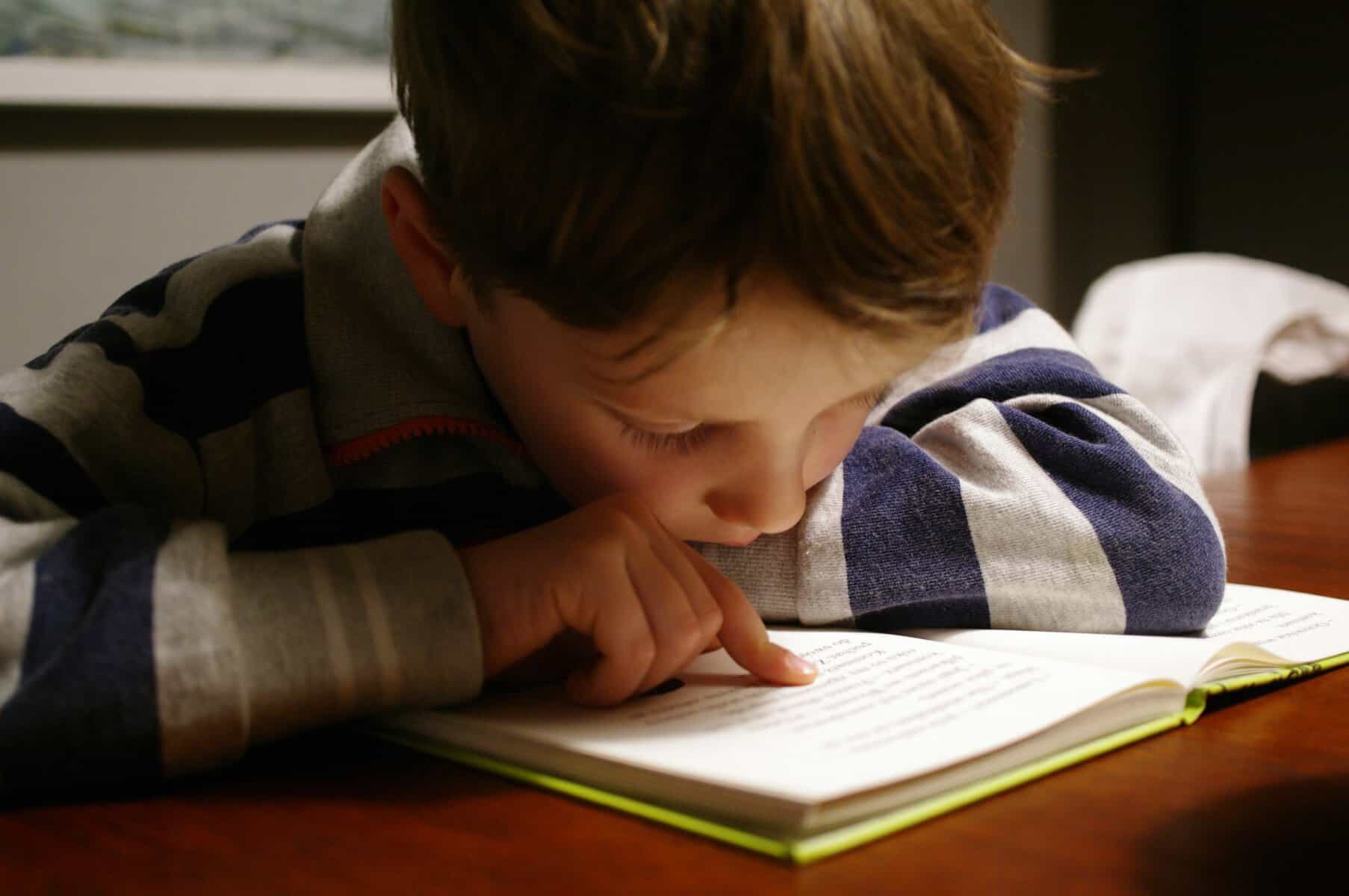
Ellie’s comprehension was excellent. Her decoding was the problem. And because she was so good at the part we talk about out loud, it was easy to miss the part she was struggling with.
After Ellie’s parents had her tested, the results showed two things. She had a high IQ, and she had dyslexia. Her strengths had been hiding her struggle.
What Dyslexia Actually Is
Dyslexia is a specific learning disability that makes word reading and spelling hard. The International Dyslexia Association’s updated definition, adopted in October 2025, describes it as difficulty with word reading and/or spelling that involves accuracy, speed, or both.
It is not a vision problem. It is not about intelligence. And it is not about effort.
Here’s the tricky part, friend. Bright kids are very good at covering. Researchers who write about “stealth dyslexia” put it this way: the gifts mask the disability. A child with a big vocabulary and strong reasoning can guess from the pictures, lean on memory, and sail through a discussion. The adults around them see a smart kid and assume the reading will catch up.
Or they see a smart kid who isn’t doing the work. The Colorado Department of Education’s dyslexia handbook says it plainly: students like this can be mislabeled as unmotivated.
That is not a character flaw. That is a child whose strengths are hiding the struggle.
What It Can Look Like at Home
One or two of these doesn’t mean anything. A pattern that keeps showing up, even with good teaching, is what to pay attention to.
- Reading aloud is exhausting. She guesses at words, skips little ones, loses her place, or reads the first letters and fills in the rest.
- Spelling won’t stick. He gets a word right on Friday and wrong on Monday.
- Loves stories, avoids books. She begs for read-alouds and audiobooks and disappears when it’s time for independent reading.
- Big ideas, messy writing. He talks like an older kid and writes like a younger one.
- Comprehension looks great out loud and falls apart on paper. This was Ellie.
- Stress. Stomachaches, meltdowns, or a quiet “I’m dumb” that breaks your heart.
Please Don’t Wait and See
I know how tempting it is to wait. Kids develop at different speeds, and nobody wants to put a label on a seven-year-old.
But here’s what I’ve learned in thirty years: asking the question doesn’t label your child. It just gets you information. And the earlier a child with dyslexia gets the right kind of teaching, the better.
If your gut says something is off, trust it. You know your kid.
What to Do Next
- Write down what you see. Notice how long reading takes, which words trip them up, and what their writing looks like. Specifics help.
- Ask for a full evaluation. I’m a teacher, not a diagnostician, and a diagnosis needs a qualified professional, like a licensed psychologist or an educational diagnostician. Homeschool families can often still request an evaluation through their school district, but the rules vary by state, so check yours.
- Look for structured literacy. Children with dyslexia need direct reading instruction that is highly explicit and systematic, built on the science of reading, and cumulative. Orton-Gillingham is the original approach. The Wilson Reading System and the Barton Reading & Spelling System are two well-known programs built on its principles, and this parent’s guide walks through all three. This instruction is usually delivered one-to-one or in a very small group, ideally by someone trained in the program. And it takes time. Progress is measured in months and years, not weeks.
- Keep the stories going. Audiobooks count as reading, and they keep a child’s comprehension and love of books growing while the decoding work happens. (I wrote a whole post on that, here.)
Where YSA Fits
Let me be really clear about what we do and don’t do.
At YSA, we offer one-on-one tutoring and small groups, and we welcome audiobooks so that kids can keep building comprehension skills. Those are separate from decoding skills, and a child shouldn’t be held back on one because they’re still working on the other. We give as many accommodations as a child needs.
We also work hard to spot concerns early. When we’re teaching phonics and beginning reading skills in the early grades, we’re watching closely for the kids whose reading isn’t clicking the way it should.
But a child with dyslexia will need direct reading instruction using one of the established systems I mentioned above, like Orton-Gillingham or Wilson. If that’s something we can’t provide ourselves, we’ll help you find it. You won’t be left to figure it out alone.
You’re Not Behind
Dyslexia is easy to miss, especially in a bright kid who is working so hard to hide it.
The fact that you’re reading this, asking the question, and looking for answers tells me everything I need to know about the kind of parent you are.
Hang in there, friend. There’s a plan, and there are people who can help. I’m so glad you’re here.
💙 Kim

