
5 Christmas Read-Alouds Your Kids Will Want to Act Out (Reader’s Theater for Home)
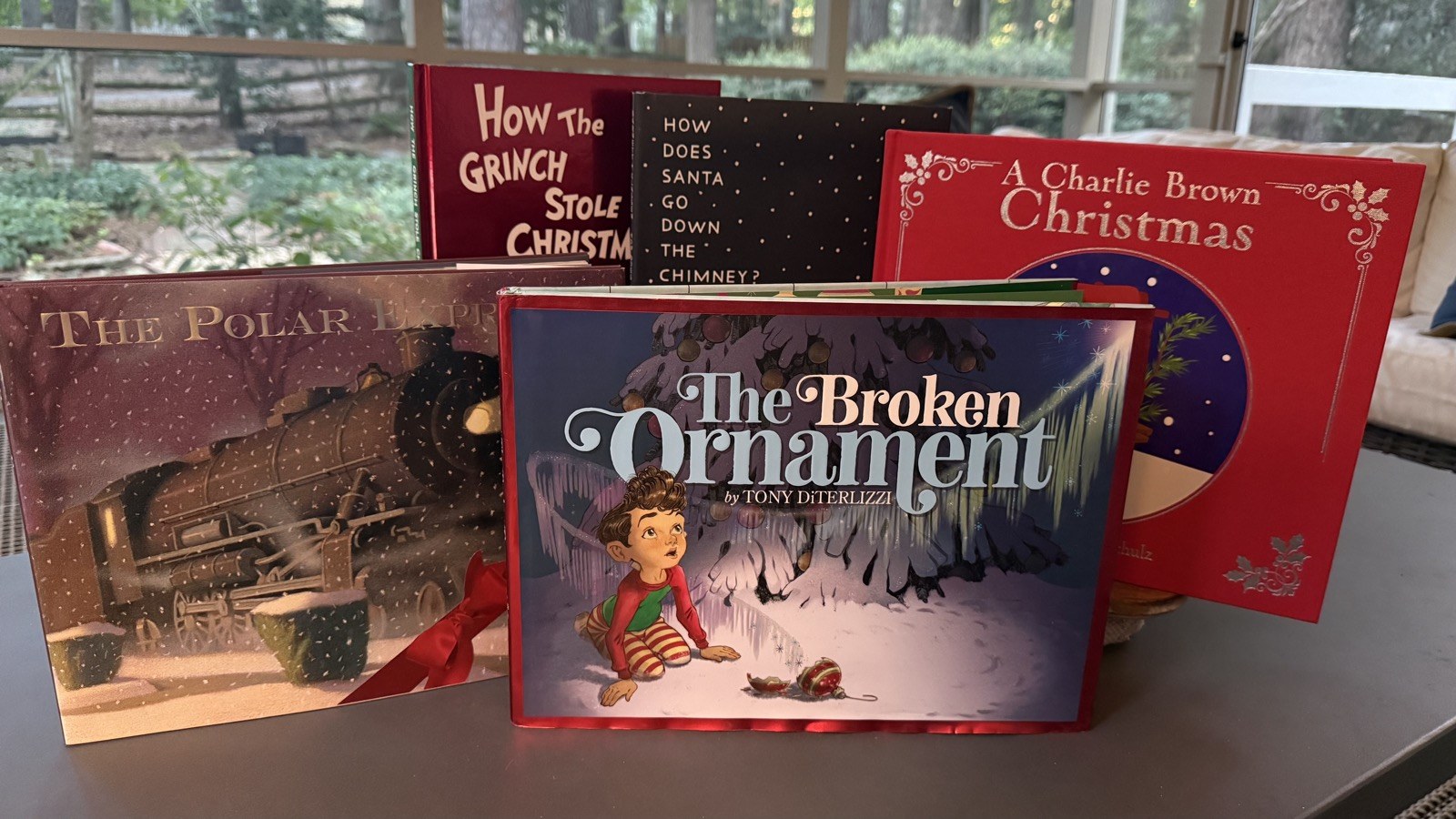
Raise your hand if your kiddos are already counting down the days to Christmas. 🙋♀️
Can I tell you about my favorite Christmas book when I was little? It was Mr. Willowby’s Christmas Tree by Robert Barry. I would take it to my mom, crawl up in her lap (or bring it to bed at night) and beg her to read it to me. I was fascinated by the mice and how they get a Christmas tree too.
We read it so much that my mom gifted it to me as an adult, so I could keep my own copy. ❤️
My husband has a similar story with The Sweet Smell of Christmas by Patricia M. Scarry (illustrated by J. P. Miller). We loved reading both of these to our own boys when they were little.
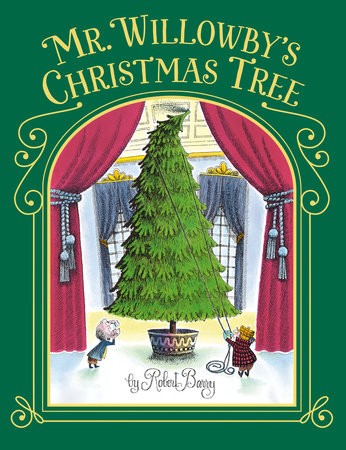
The two books that started it all at our house:
Mr. Willowby’s Christmas Tree on Bookshop.orgThe Sweet Smell of Christmas on Bookshop.orgAffiliate links: I earn a small commission at no extra cost to you.
I want to share one of my favorite ways to use all of that holiday excitement: read a great Christmas book aloud, and then act it out together. I’m in my 30th year in education, and I love, love, love a good Reader’s Theater. It is reading practice that never feels like practice.
My 5 favorite Christmas read-alouds to act out: How the Grinch Stole Christmas!, A Charlie Brown Christmas, The Polar Express, The Broken Ornament and How Does Santa Go Down the Chimney? Read the picture book aloud first, then hand out the parts and let the kids put on the show.
Why read it first, then act it out?
Here’s how I do it in my classroom, every single time. We read the actual picture book aloud first, and I show all the pictures. Then I hand out the script, everybody colors in their part, and the kids break into small groups.
In their small groups, they read it again. And again. And nobody complains, because every run-through is getting them ready for the show. Sneaky? A little. But oh my goodness, it works.
Here’s why I keep coming back to Reader’s Theater:
- Every reader gets a win. You can hand out parts so every child is successful, and your more hesitant readers get to shine in front of the group.
- Fluency and expression grow. Kids reread the same lines over and over, and they start to sound like confident readers. Research backs this up: the National Reading Panel found that guided repeated oral reading had a significant, positive impact on word recognition, fluency and comprehension.
- Comprehension grows with every reading. Once the story isn’t a surprise, kids start noticing the details and the feelings.
- They practice speaking up. Projection, articulation, waiting for your cue. Real presentation skills, wrapped up in a Christmas story.
No problem! Kids can read more than one part (just don’t give one child two lines in a row). You read the narrator, they read everyone else, then swap. Grandparents, cousins and siblings can all get a part. (Maisie and Sophie would like to audition. 🐶)
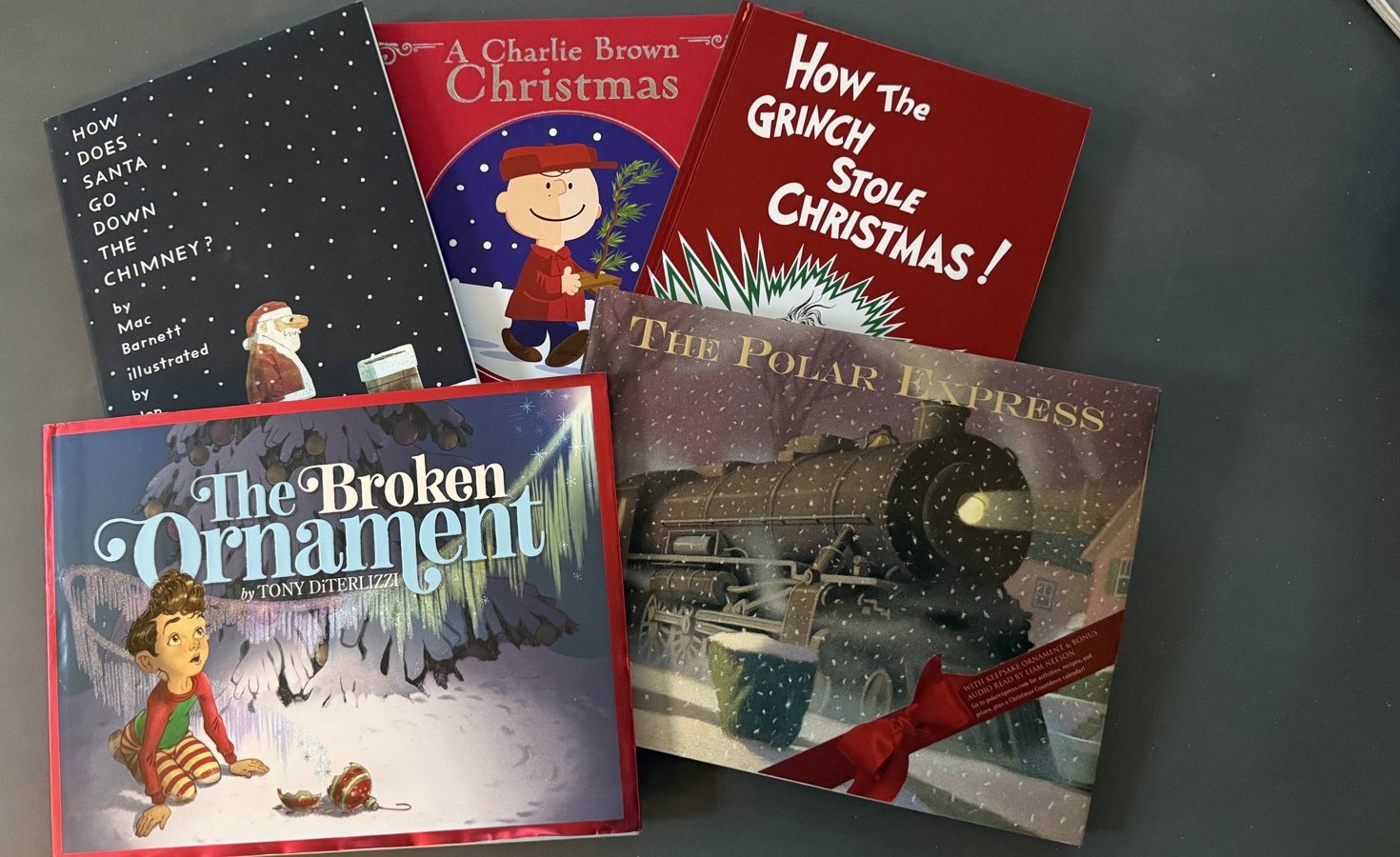
My 5 favorite Christmas read-alouds to act out
This post has affiliate links. If you buy through my Bookshop.org shop, I earn a small commission at no extra cost to you, and the money supports independent bookstores too. Or grab them from your library (my favorite way!).
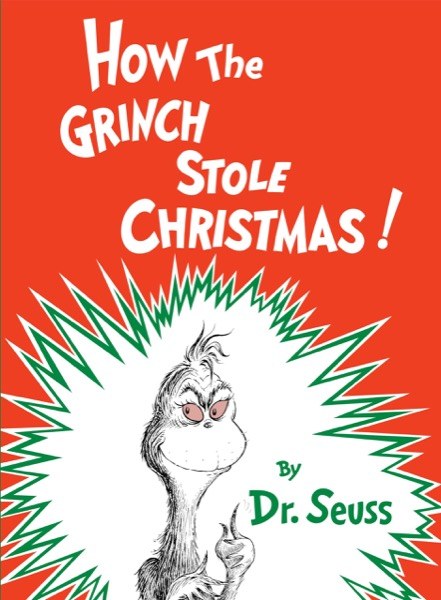
How the Grinch Stole Christmas!
You know this one, right? The Grinch, who lives just north of Who-ville, decides to stop Christmas from coming, and it does not go the way he planned. It’s a classic for a reason, and kids already know the characters before you even open the book.
From my classroom: This is one of my favorite Reader’s Theater scripts. It’s longer than most and has some fun choral reading built right in, where everybody reads together.
The script: 15 parts as written (14 narrators plus the Grinch, and Cindy-Lou has one line), and it flexes from 8 all the way up to 30 kids. Five scenes. Activities: character analysis with text evidence, sequencing, a word search, a coloring page and a coloring-page puzzle, with answer keys. Best for: upper elementary (the narrator parts are long).
Get the book on Bookshop.orgSee the Reader’s Theater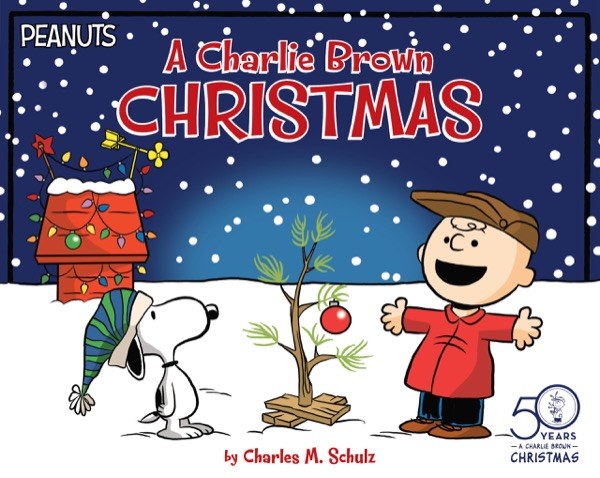
A Charlie Brown Christmas
Charlie Brown can’t seem to find the holiday spirit, and the whole Peanuts gang comes along while he figures out what Christmas is really about. Love me some Snoopy.
From my classroom: Linus has the big moment in this one. He only has a few lines, but one of them is almost a full page, so give it to a strong reader who loves the spotlight.
The script: 10 parts, eight scenes. Snoopy has three lines, and they’re all animal sounds. Activities: comprehension questions, sequencing, a word search, a coloring page and a coloring-page puzzle, with answer keys. Best for: mid to upper elementary.
Get the book on Bookshop.orgSee the Reader’s Theater
The Polar Express
A boy boards a mysterious train on Christmas Eve, and it carries him all the way to the North Pole. The illustrations are dreamy and dark and glowing, and it won the Caldecott Medal in 1986. Show every single picture before you act it out.
From my classroom: The Boy can be split into three parts and the Conductor into two, so this one stretches beautifully for a big group. Friend only has one line, so I give it to the reader playing Sarah, since Sarah doesn’t have any lines until the end of the play.
The script: 19 parts as written, and it flexes from 6 to 35 readers (18 to 20 is the sweet spot). Eight scenes. Activities: character analysis with text evidence, comprehension questions, a word search, a coloring-page puzzle and a coloring page, with answer keys. Best for: upper elementary.
Get the book on Bookshop.orgSee the Reader’s Theater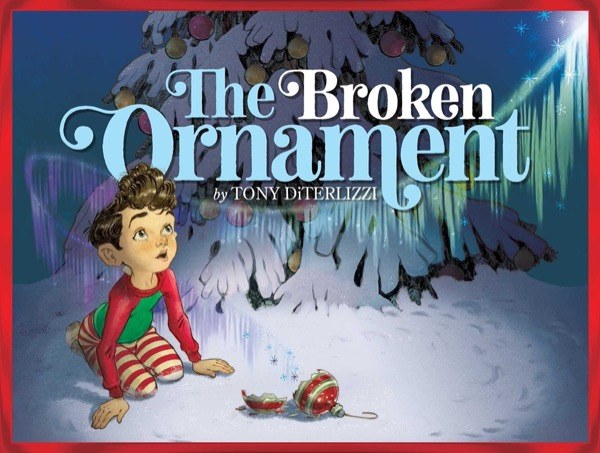
The Broken Ornament
Jack wants MORE. More lights, more presents, more cookies. Then he breaks an old family ornament, a fairy pops out, and Christmas magic goes a little wild while Jack learns what really matters. It’s a beautiful story about mistakes, family and the magic of Christmas.
From my classroom: Narrators 4 through 9 get a fun, rowdy part, and it is a little bit larger. Pick your hams for those!
The script: 24 parts, or as few as 6 if you combine them. Four scenes, and each scene gets a new set of readers. Activities: visualization with text evidence (my favorite way to start teaching kids to use imagery), character analysis, a word search and two ornament coloring pages. Best for: grades 2-5.
Get the book on Bookshop.orgSee the Reader’s Theater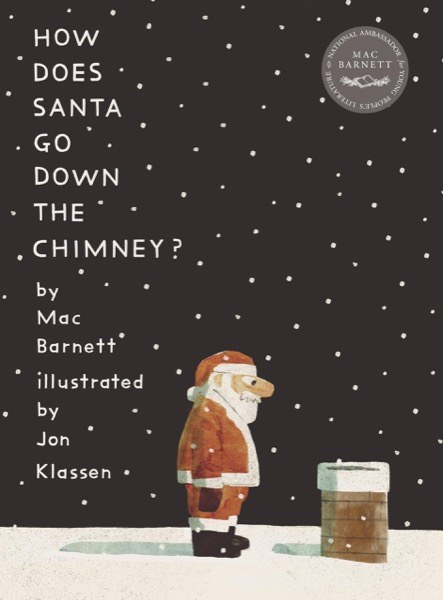
How Does Santa Go Down the Chimney?
Feet first or head first? What if he gets stuck? What if there’s no chimney at all?! This one is so funny, and the answers get sillier and sillier as the night goes on. Your littles will have their own theories, I promise.
From my classroom: I love how this one came together. It’s perfect for younger kids or anyone who has never done Reader’s Theater before. Every scene has just two readers, so they can practice together, and then all 20 read the ending together.
The script: 20 parts, all narrators, in ten short scenes. The last scene has quick back-and-forth lines, so practice the timing. It’s adorable. Activities: visualization with text evidence, a rhyming worksheet, an I Spy page and a word search, with answer keys. Best for: younger readers and first-time Reader’s Theater kids.
Get the book on Bookshop.orgSee the Reader’s TheaterHow to put on a Reader’s Theater at home (no stage required)
- Read the book aloud first. Show every picture. This is the part kids remember.
- Hand out the parts. Each reader colors in their name block on the script, so they can find their lines fast.
- Practice. Read it through together a few times, or let kids practice their own lines first and then come back together.
- Pick your show. Stay in your seats and read it. Or stand up front. Or add some motions and a simple costume piece. Or, my very favorite, go all out: props, costumes, music, a playbill, and a real audience. (Christmas dinner, anyone?)
- Do something after. A quick follow-up page (sequencing, a character trait with text evidence, a coloring page) helps the story stick.
Want the scripts?
If you’d like to skip the prep, I have a Reader’s Theater script with follow-up activities and answer keys for every book on this list. Just print the script, assign the parts, and enjoy the show. They work for families, co-ops, church groups, scouts and classrooms. No pressure, they’re there if you want them. 💚
Four scripts in one: How the Grinch Stole Christmas!, A Charlie Brown Christmas, The Polar Express and How Does Santa Go Down the Chimney?, each with its follow-up activities and answer keys.
See the bundle on TeacherStoreLooking for The Broken Ornament? That one is sold on its own: The Broken Ornament Reader’s Theater
Christmas Reader’s Theater FAQ
What age is Reader’s Theater good for?
Honestly, any age. I have used it with every grade level I have taught. For younger kids, start with How Does Santa Go Down the Chimney? because the parts are short. Older kids love the long narrator parts in The Grinch and The Polar Express.
Do I need a big group?
Nope. Kids can read more than one part, and some scripts shrink way down (The Broken Ornament works with as few as 6 parts). With one child, you read some parts and they read the rest.
How long does it take?
As long as you want! You can do it in one sitting, or practice a little each day for a week and put on the show on the weekend.
Do I need to buy the books?
Not at all. Check your library first (that’s my favorite way!) and put them on hold early in the season.
The big takeaway
You don’t need a stage, a big group or a lot of prep. Read a great Christmas book, hand out the parts, and let your kids be the stars. They’ll be rereading the same story over and over and having the time of their lives.
I’m proud of you. You’re doing the hard work, and your kids will love you for it. 🎄
Kim
Sources
- Dr. Seuss, How the Grinch Stole Christmas!, Random House Books for Young Readers (first published 1957). Publisher page: penguinrandomhouse.com, accessed Oct 20, 2026.
- Charles M. Schulz, A Charlie Brown Christmas (adapted by Tina Gallo, illustrated by Scott Jeralds), Simon Spotlight, 2015. Publisher page (deluxe 50th anniversary edition): simonandschuster.com; listing: Bookshop.org, accessed Oct 21, 2026.
- Carrie Hagen, “The ‘Charlie Brown Christmas’ Special Was the Flop That Wasn’t,” Smithsonian Magazine, Dec. 9, 2015 (CBS first aired the special on December 9, 1965). smithsonianmag.com, accessed Oct 21, 2026.
- Association for Library Service to Children (ALA), Caldecott Medal & Honor Books, 1938 to Present: “1986 Medal Winner: The Polar Express by Chris Van Allsburg (Houghton).” ala.org, accessed Oct 20, 2026.
- American Library Association, “The Polar Express” book summary. ala.org/winner/polar-express, accessed Oct 20, 2026.
- Tony DiTerlizzi, The Broken Ornament, Simon & Schuster Books for Young Readers, Sept. 18, 2018. Publisher listing: simonandschuster.ca, accessed Oct 20, 2026.
- Mac Barnett and Jon Klassen, How Does Santa Go Down the Chimney?, Candlewick, Sept. 12, 2023. Publishers Weekly listing, accessed Oct 20, 2026.
- National Reading Panel, Report of the National Reading Panel: Teaching Children to Read, Chapter 3 (Fluency), NICHD, 2000. nichd.nih.gov; summary: Reading Rockets.
- Robert Barry, Mr. Willowby’s Christmas Tree (first published 1963), Doubleday Books for Young Readers edition, 2000. Publisher page: penguinrandomhouse.com (cover image from Penguin Random House), accessed Oct 21, 2026.
- Patricia M. Scarry, illustrated by J. P. Miller, The Sweet Smell of Christmas, Golden Books. Publisher page: penguinrandomhouse.com, accessed Oct 21, 2026.
- Kim’s childhood and family memories of these two books are her own.
- Reader’s Theater methods, part counts and classroom practices in this post are Kim’s own experience and her own scripts.
The Young Scholar Academy (YSA) is an online academy for homeschool families. Its program, YSA Homeroom, offers live small-group learning pods of no more than 8 students for grades 1-8, taught by certified teachers and founded by Kim Baust, “The Literature Lady.”


